

Olhão is a charming and authentic fishing town in the heart of the east Algarve. It boasts a picturesque waterfront, a bustling fishing harbor, and a maze of cobbled backstreets in its historic fishermen’s quarter. The town is widely regarded as the ‘gateway’ to the Ria Formosa, and its waterfront opens onto the waterways and lagoons of the Ria Formosa Natural Park. To the south of Olhão the sandbar islands of Ilha da Armona and Ilha da Culatra offer their stunning island landscapes and beautiful beaches.
Olhão is perhaps overshadowed by its neighbours, it’s not quite as picturesque as Tavira, and its not quite the bustling and historic city of Faro. It’s a traditional fishing town that’s somewhere in between. In my opinion, Olhão is one of the most underrated towns in the Algarve, and for anyone looking to find an authentic side to the Algarve, you can’t go wrong with Olhão.
How to Find Olhão
It’s a short 15-minute drive along the N125 from Faro. Alternatively, it’s two stops on the train from Faro’s central station. There’s buses too, but the train is that much more convenient.
The Best Things to See and Do in Olhão
Olhão’s a small town and with just a few hours of exploring it’s easy see the major sites. We’ll start at recently redeveloped waterfront.

Olhão market – Mercado Municipal
Situated along Olhão’s waterfront are the impressive twin red-brick buildings of the town’s Mercado Municipal. These identical rectangular structures house Olhão’s bustling municipal market, with the eastern building dedicated to fresh fish and the western one to fruits and vegetables. The origins of Olhão’s market date back to 1866, when it was little more than a simple shed.
As the town grew, the need for a proper municipal market became apparent. In 1912, spurred by the spirit of progress ushered in by the Republic, the City Council initiated the construction of the current market buildings. These were completed and inaugurated in 1915. Today, on Saturday mornings, the market comes to life with an extended farmers’ market, where local farmers and producers take to the streets surrounding the market buildings to display and sell their goods directly to the public, offering a vibrant taste of the region’s bounty.
Local Insight: Don’t believe the rumours, Olhao’s beautiful red brick market buildings were not designed and built by Gustave Eiffel.

The Bom Sucesso
Moored just behind Olhão’s market is a replica of the “Bom Sucesso” fishing boat, a vessel that holds a remarkable place in Portuguese and Olhão’s history. In 1808, seventeen brave fishermen embarked on a daring voyage from Portugal to Brazil aboard this small boat, relying solely on the stars and a rudimentary map to guide them.
Their incredible journey was undertaken to deliver a crucial message to the exiled King João VI, informing him of the defeat of Napoleon’s army in the Algarve. Despite being just 20 meters in length and originally designed for sardine fishing, the tiny boat successfully completed the 5,500-kilometer voyage across the Atlantic.
This heroic feat earned Olhão the status of a town, freeing it from the longstanding rivalry between Faro and Tavira.
Local Insight: If you can visit Olhão during the Christmas period, the market buildings and Bom Successo will be covered in Christmas lights – making this spot a very special and unique place to visit.

Olhão Cubist houses and Old Quarter
The fisherman’s quarter, known as Bairro dos Pescadores, is a maze of narrow, cobbled alleys lined with whitewashed houses. These distinctive homes are built in a cubic shape, with one or two stories and flat, terraced roofs. Supposedly, there are two reasons for this. The flat roofs and terraces were designed to offer an unobstructed view of the harbour, allowing fishermen’s wives to watch for the return of their husbands. Similarly, once those boats had returned, those flat roofs would have been used to process and dry the fish in the strong Algarve sun.

The Igreja Matriz de Nossa Senhora do Rosário – Olhão’s Church
The Igreja Matriz de Nossa Senhora do Rosário, is a late 17th-century church built in Rococo style. This beautiful church was built with donations from local fishermen and their families, reflecting the community’s deep faith and connection to the sea. Visitors can climb the bell tower for a modest fee (€1.00) to enjoy stunning views over central Olhão.
Behind the church lies the Capela de Nosso Senhor dos Aflitos, a small chapel with great significance to the local community. Historically, fishermen’s families would gather here to pray for the safe return of their loved ones or to mourn those lost at sea.

Museu Municipal de Olhão – Municipa Museum of Olhão
The Museu Municipal de Olhão, formerly the headquarters of the Compromisso Marítimo—a historic organization that supported fishermen and their families – is now the city’s most significant museum.
Visitors can explore three distinct sections that chronicle different aspects of Olhão’s history. The first of these is dedicated to archaeological discoveries, spanning from prehistoric times through the Roman era and into the period of Moorish rule.
The second section delves into the history of salt extraction in the Algarve, highlighting its economic and cultural significance. The final part of the museum focuses on the importance of the sea in Olhão’s history, capturing the town’s deep maritime heritage.

Olhão’s Street Art and Murals
That maritime and fishing history is on display in many parts of the town. If you head to the old canning factory on Rua da Fábrica Velha you’ll find a series of murals celebrating this fishing heritage, from tending nets, to catching fish, and ultimately processing them. It’s a great area to wonder around in and get lost.
The main murals are by a local Artist named ASUR (formerly known by the name of Dgiphi), the artwork in Olhão is all signed under the previous name Dgiphi but his more recent works are under the name of ASUR.

Olhão’s Beaches
It’s hard to mention or even think about the Algarve without thinking about its incredible beaches. Olhão is no different, but you’ll need to use a ferry, taxi boat, or local transport to get to its best beaches.
The Ria Formosa
The incredible island beaches of the Ria Formosa are some of the best in the Algarve, and nearly all of them are accessible from Olhão. These sandbar islands offer beaches that are sheltered by the natural lagoon and are amazing places to visit.
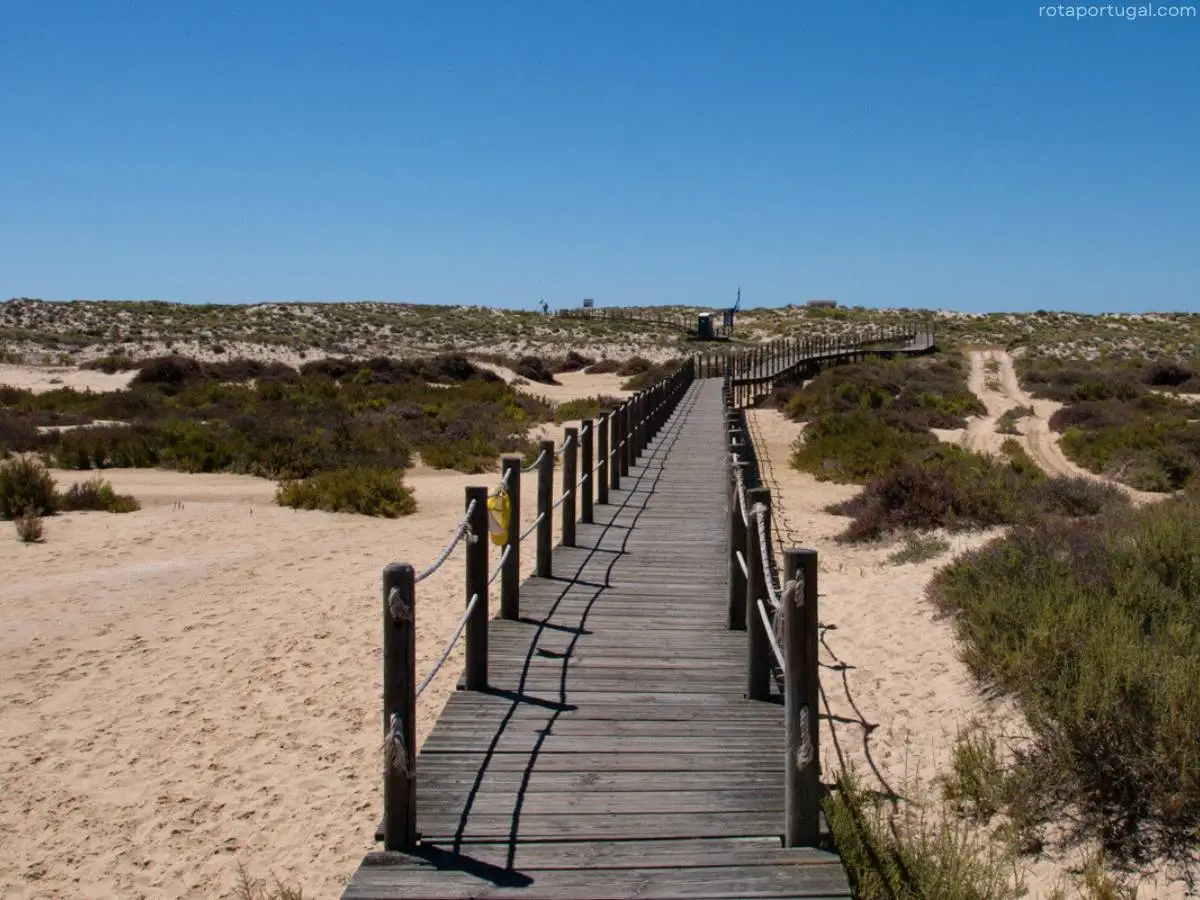
From Olhão, you can choose between two islands and their beaches: Armona (the nearest, just 15 minutes away), Culatra, or Farol. Together, they boast over 10 kilometers of sandy coastline, accessed by boardwalks that lead you across wild dunes and scrubland teeming with wildlife.
Read More: The Ria Formosa

The Best Way to Explore the Ria Formosa from Olhão
Exploring the lagoon’s protected wetlands and islands by boat is a fantastic way to experience the coast. From Olhão marina you’ll find a selection of trips and tours, from full-day excursions which typically include stops at two islands, with time for lunch and a chance to dive into the crystal-clear waters from the boat. Don’t forget to bring your snorkel!
Ilha da Armona
Ilha da Armona is the closest of the islands, a short trip on the public ferry takes around 15-20 minutes. Ilha da Armona is one of the most popular islands in the Ria Formosa and hosts a small community. It’s one of the most developed islands, and you’ll also find a few holiday homes within its network of small streets. There are actually around 50 permanent residents, primarily relying on fishing and tourism for their livelihoods. There’s a few restaurants, bars, and cafés too!
Visitors to the island can enjoy a variety of activities, including strolling along the designated paths through the dunes, relaxing on the incredible beach, and exploring the streets of what was once a bustling fishing village.
The main beach – Praia da Armona is one of the most beautiful in the Algarve, and offers all the necessary amenities for a perfect day by the sea. During the summer months it is life guarded, and you’ll also find sun bed and parasol rental available.
Ilha da Culatra
To the south of Olhão lies Ilha da Culatra, another incredible sandbar island. Ilha da Culatra is roughly split between two communities Culatra and Ilha do Farol. Yes, a part of this island is named as if it’s a separate island. Ilha do Farol, is simply the western end of Ilha da Culatra.
The public ferries depart Olhão, stop at Culatra, and then head to Farol before making the trip back to Olhão.
Ilha da Culatra is one of my favourite islands of in Ria Formosa, if you’re looking for one of the best things to do in Olhão, this island should be at the top of your list! To get the best feel for the island, I recommend catching the ferry to the village of Culatra, exploring the village and then heading to the eastern end of the island to Farol. From Farol you can then take the ferry back to Olhão. It makes a great day trip and you get to see the whole island and its different communities.
Farol – Ilha do Farol
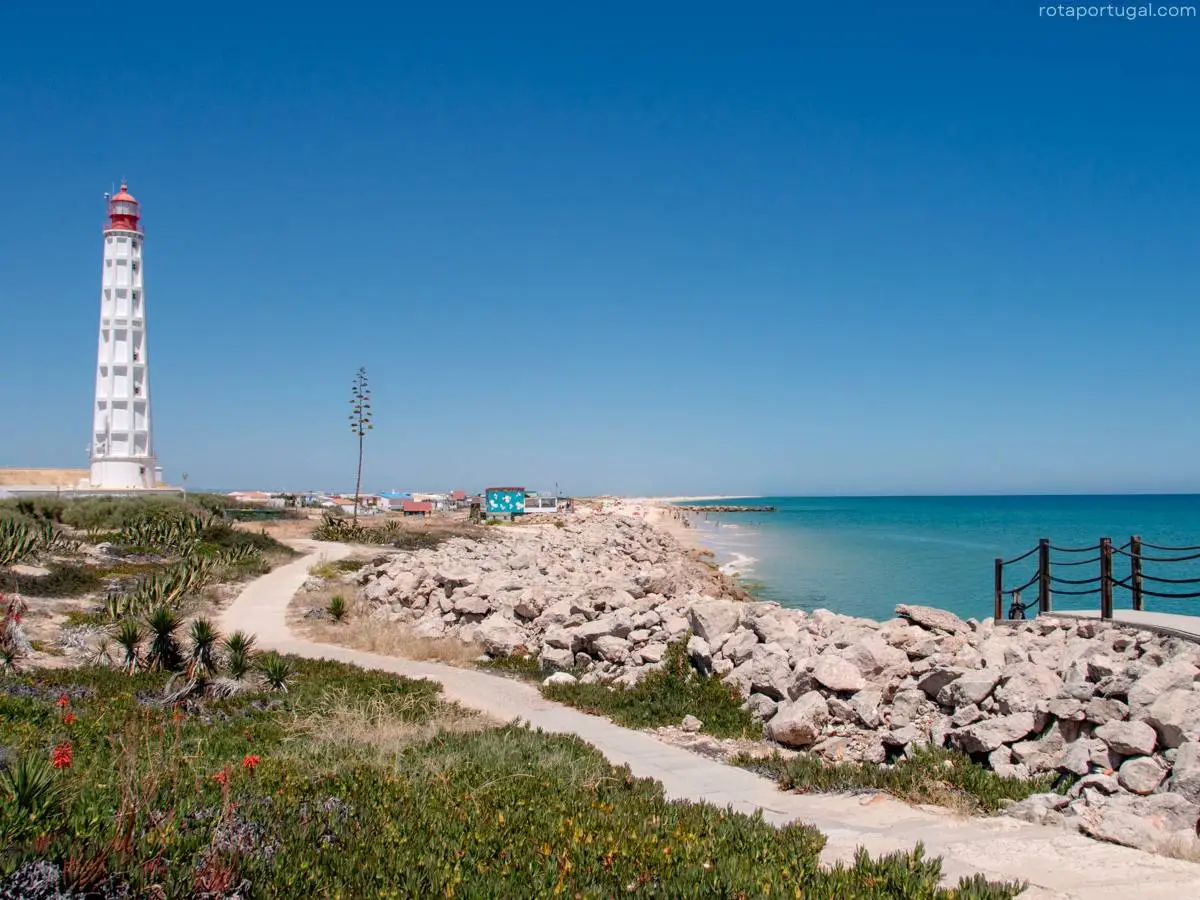
Whether you walk, or take the ferry, Farol is perhaps the most scenic of the communities. The low former fisherman’s houses are all watched over by a beautiful lighthouse – Cabo de Santa Maria Lighthouse. Several of these fisherman’s cottages are now transformed into holiday homes and vacation rentals if you want to experience an overnight stay on this island.
The charming village dates back to the 19th century, and today has a small selection of bars and restaurants between the one story houses. It’s a delightful place to wonder around taking in the architecture and gardens of these homes.
Of course, the big reason most visitors come to these islands is the beaches, and Ilha do Farol is no different. It offers a stunning beach, probably the best beach in the Algarve! The beach has several sections, allowing you to make use of concessioned areas for sun bed and parasol rental, as well as an expansive free area for you to stroll and escape the crowds.
The Parque Natural da Ria Formosa – Quinta da Marim
Okay, so if you want to experience the Ria Formosa, without taking a ferry to one of its islands, it’s possible to do that too! The educational centre at Quinta da Marim formerly known as Centro de Educação Ambiental de Marim is a small visitor centre. As well as offering information on the unique environments within the Ria Formosa, there’s a guided 3km trail for you to walk along. This will take you through pine forest, dunes, and wetland marsh allowing to see much of the natural habitat of the Ria Formosa.
Depending on the time of year, you’re likely to see lots of wildlife. It is home to numerous wading birds, including egrets, ibis, and spoonbills, and serves as a vital resting spot for birds migrating between Europe and Africa. On the land, you’ll find other nesting birds, and if you look closely maybe a rare chameleon or two!
The visitor centre is accessible by car or by walking from Olhão, it’s a great activity especially for kids and families!
The saltwater mudflats and tidal lagoons just south of Olhão are safeguarded within the Parque Natural da Ria Formosa, a protected area known for its rich biodiversity.
Read More: The Ria Formosa
Is Olhão Worth a Visit?
Olhão is a fantastic destination in the Algarve, and great for anyone looking to experience a more authentic side to it.